- GBPNIHE, Sikkim Regional Centre, Pangthang, Gangtok
- Photo Gallery
Livelihood support
Dzongu site, it was found as a result of year-long field visits, surveys and Rural
Appraisal (PRA) etc, that
the decreasing livelihood options of the local people of the region and their increasing dependence on
forest resources which could be compensated by the development of ecotourism in the Pilot Site. There
are
many agricultural products which support livelihoods of the villagers of Lingthem-Lingdem GPU. For long,
various types of local products are made from the available resources either for self consumption or for
the
sale in local markets but decreasing with production of large cardamom, the most of the youth generation
are
mobilised to urban area for looking jobs. The site has also various issues related to the human-wildlife
conflict, local livelihood, ecosystem management, etc. and has various opportunities to develop itself
as an
ecotourism destination dealing conservation and livelihood together. So far, promotion and strengthen
the
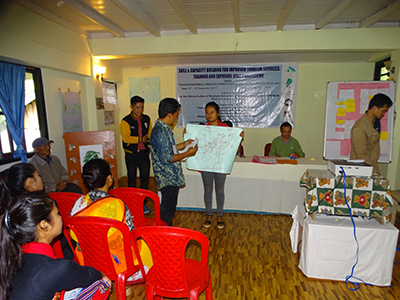
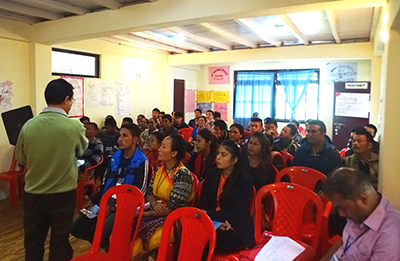
ecotourism services in the pilot site a community is developed as well as a five days long programme was
organised based on "Organized skill & Capacity Building for Improved Tourism Services: Training and
Exposure
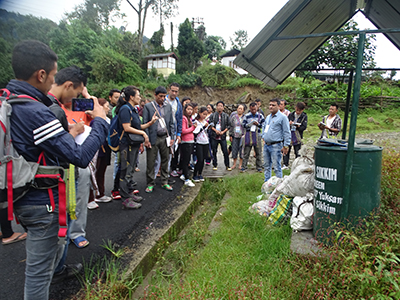
visit programme was organised at Yuksam to mobilize and train the local people towards ecotourism
services
in the village. Focussing on proper management and empowering local people with skills for improving
ecotourism services, this training-cum-exposure visit was conducted in Yuksam, Sikkim, in collaboration
with
the KhangchendzongaConservation Committee (KCC).
The identifid venue, Yuksam, is already well
known for its
development in the field of community-based tourism and has gained much fame for its ecotourism
management
and services, both nationally and internationally. An exposure visit to this region was thought to be
the
best step possible to mobilise the people and develop an interest in this cause among the participants.
The
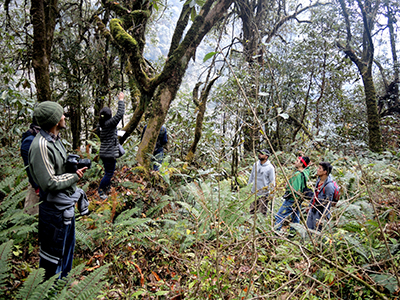
pronounced dependency of the community over the forest resources was also found in the Dzongu site. An
initiative was taken to understand the demand and supply of fodder species in the region following the
household survey of the use pattern and vegetation
sampling in the region from where the fodders are extracted. Based on the objective of the
project, the Lingdem village under Lindem-Lingthem, Gram Panchayat Unit (GPU), has been
identified based on their dependency on cattle rearing for the agricultural purposes and dairy
products. Songbing tourism management and development committee (STMDC) is formed in Dzongu for
strengthen
tourism sector in the region and in collaboration with this community an Ecotourism festival has been
organised in the region under the KLCDI- India programme.
Barsey-Singalila site, similarly, it was found as a result of year-long field visits,
surveys and Rural
Appraisal (PRA) etc, that the decreasing livelihood options of the local people of the region and their
increasing dependence on agricultural practices and tourism in identified part of West Bengal (Gorkhey
and
Samaden Villages); while in Ribdi-Bhareng village (Sikkim), farming is the major occupation. Community
in
the site heavily depend on the utilization of natural resources for their livelihood i.e. firewood, wild
edible, fodder, timber, etc. Increasing dependency on forest resources and decreasing of livelihood
option,
the dairy farming was the best option of livelihood which support income of the community of the village
of
Ribdi-Bhareng. So, far, a three days long training was organised on "Training cum Exposure visit On
Animal
Nutrition and Health Care for Improving Dairy Production'. The programme was organised by GBPNIHESD in
collaboration with potential stakeholders such as The Mountain Institute-India (TMI-Gangtok),
DISHA-Kalimpong, and Animal Husbandry Department, Government of Sikkim at PanchayatBhawan,
Ribdi-Bhareng,
West Sikkim from 16th – 18th November, 2017, under KLCDI-India Programme. The main objective of the
training
was to promote dairy farming in the site. This could be conceived by creating awareness in local
farmers,
through integrating both traditional and scientific techniques of dairy farming practices. In this
context,
to promote and strengthen rearing of livestock and dairy farming in the village, distributed common
medicines to the all participants along with the chopper machines for the five beneficiaries in the
training.
One of the major objectives of the implementation phase of the KLCDI-India programme
is to
improve livelihoods of Gorkhey-Samanden people by promoting production and marketing of
seasonal vegetables and off-season vegetables with special focus on deprived communities and families.
The
programme envisages in providing options for income generation and
sustainable economic growth to farmers and thereby contributing to their better livelihood..
Through involving and encouraging beneficiaries for growing vegetables in polyhouse,
promotion of cultivation of high-value vegetable crops is also being emphasized in the
Gorkhey-Samaden village. During addendum phase of KLCDI-India programme, one of the imperatives that
came
out of the community consultation and discussion for the promotion of tourism in Gorkhey-Samanden was
the
need of a local tourism committee involving the interested household members. In this contex, Gorkhey
Ecotourism Committee (GEC) is formed in Gorkhey, West Bengal for improving tourism services.
Bandapani site, decreasing interest of the locals on agricultural by the pronounced
effect of the wildlife
conflict (Human-Elephant Conflict) has been identified in the Bandapanin Site. This conflict has raised
severe concern regarding the agriculture and the livelihood of the region. The initial studies on the
trend
of the Elephant movement and conflict being important, the household survey and PRA (Participatory Rural
Appraisal) on the affected regions was initiated.
Based on household survey of Human-Elephant
Conflict in
Bandapani site, the best measure of mitigation of Human-Elephant Conflict in the region will be
identified
and Human-Elephant Conflict management plan will be developed for the region under KLCDI- India
programme.Bandapani site is considered as a significant place for tourism because of its unique
characteristics like transboundary nature, corridor connectivity with protected areas, very rich faunal
and
floral diversity, natural beauty, etc. The site already has an ecotourism committee. The activities for
strengthening Garochira Ecotourism Committee committee and proper coordination and management of the
existing committee is developed.